
Design
Hang Tag Printing: Techniques That Actually Move the Needle (2026)
A hang tag has 1.2 seconds to make the customer stop, turn it over, and read the price. Here's what actually changes purchase intent — and what's just expensive decoration.

Long Bingbing
Senior Production Engineer · 10 min read · Updated May 2026
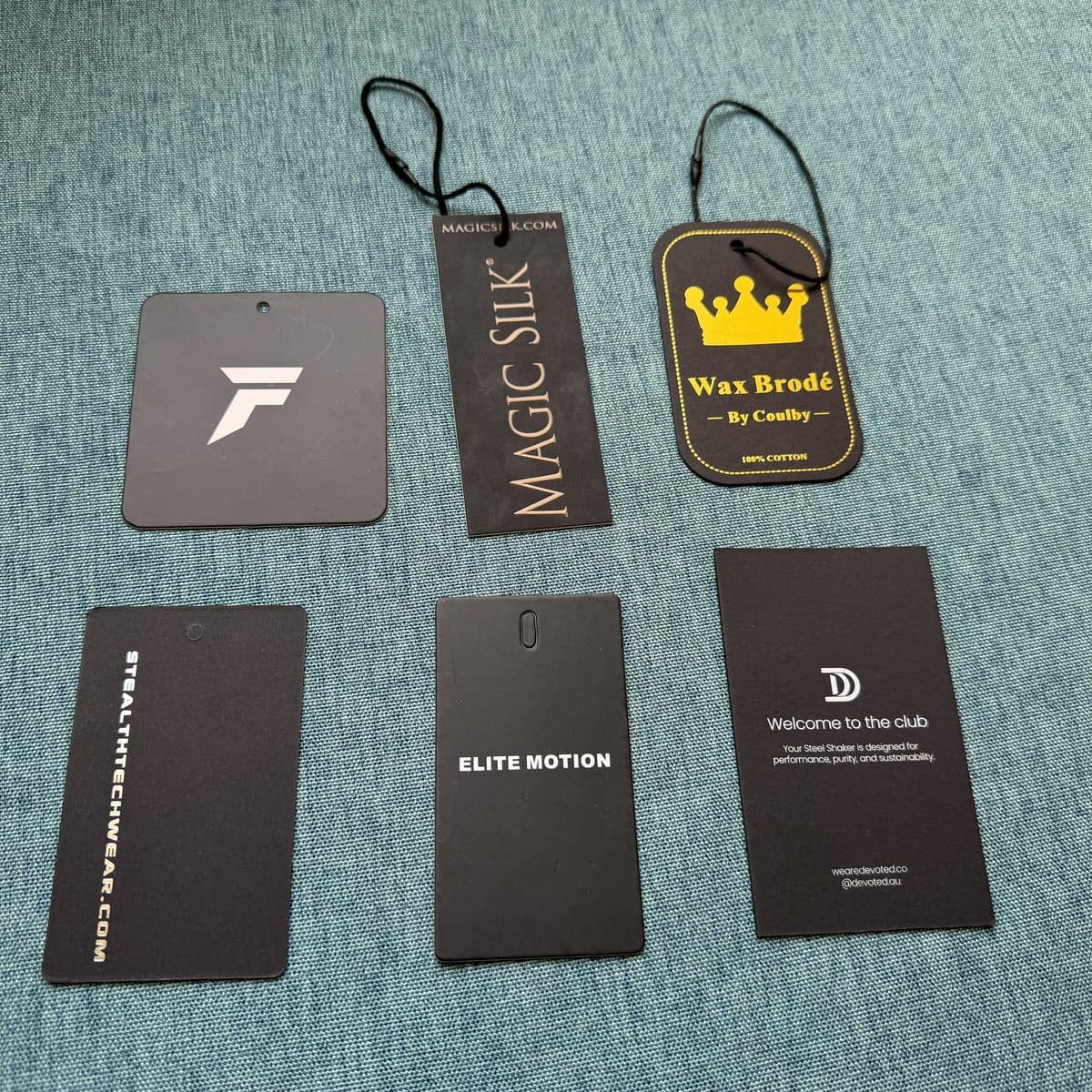
1. Paper choice — the single biggest decision
Before you talk about foil or emboss, you choose the paper. Grammage (gsm), finish (matte/gloss/uncoated/textured) and fibre source (virgin/recycled/FSC) decide 80 % of the perceived premium.
| Retail tier | Grammage | Finish | Fibre |
|---|---|---|---|
| Mass / fast fashion | 250–300 gsm | Coated gloss or matte | Virgin or mixed |
| Mid-market casual | 300–400 gsm | Uncoated, slight texture | FSC virgin |
| Premium / contemporary | 400–500 gsm | Soft-touch laminate or felt | FSC virgin or 100% recycled |
| Luxury / heritage | 500–600 gsm + double-layer | Cotton-feel uncoated, deckle edge optional | 100 % cotton or specialty |
2. Decoration techniques — what each one does
All decoration techniques attack one of three senses: sight (foil, spot UV), touch (emboss, deboss, soft-touch coating), or interaction (die-cut shapes, perforations). Stack them deliberately — three techniques on one tag screams 'design student'; one or two well-chosen ones reads 'mature brand'.
- Hot foil stamping — heat + pressure transfers a metallic film (gold, silver, copper, holographic, rose-gold). Best for logos and short text. Adds ~$0.04–0.08 / tag at 1k qty.
- Embossing — die presses paper *up* from the back. Tactile, no ink. Pairs well with deboss for layered logos. Adds ~$0.03–0.06 / tag.
- Debossing — die presses paper *down* from the front. Quieter than emboss, more architectural. Same cost as emboss.
- Spot UV — gloss-coated specific areas only, contrasted against matte stock. Photographs well in product shots. Adds ~$0.02–0.04 / tag.
- Letterpress — relief printing with deep impression and ink. Slow, expensive, premium. Best on cotton stock. Adds ~$0.10–0.20 / tag.
- Die-cut shapes — non-rectangular outlines (rounded corners, custom shapes, cut-outs). Adds the cost of one tooling die (~$80–150 one-time) but per-piece cost is minimal.
- 3D / sculpted emboss — multi-level emboss for premium leather-feel logos. Visible from across the rack. Adds ~$0.08–0.15 / tag.
- Foil + emboss combo (registered) — foil hits inside the emboss; expensive but visually unbeatable. Adds ~$0.10–0.18 / tag.
3. Side-by-side: how each technique reads in store light
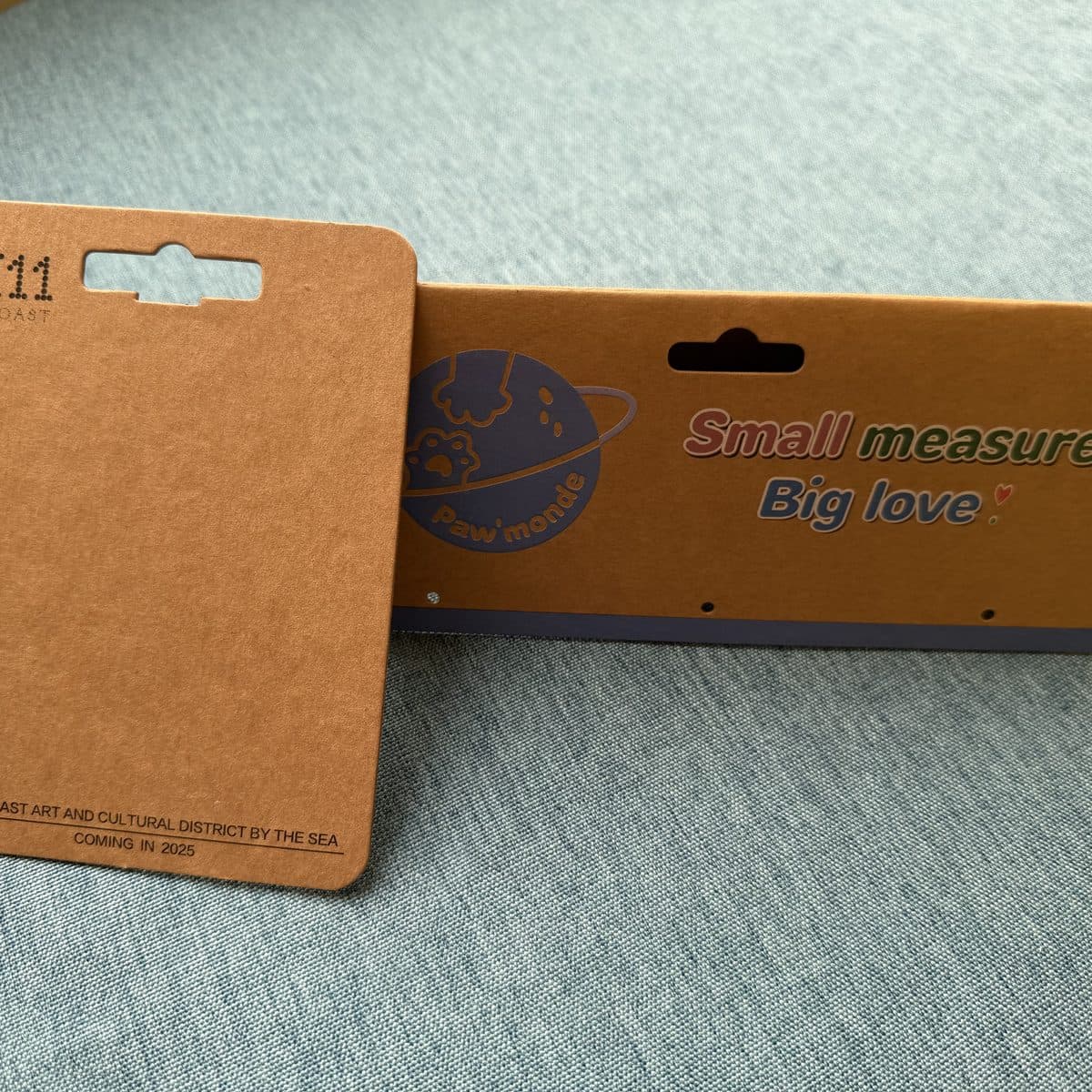
Counter-intuitive observation from running this test on retail floors: in bright halogen lighting, deboss outperforms hot foil for slow-fashion brand recognition. In dimmer boutique lighting, foil wins. Pick technique to match the lighting your tag will actually live under.
4. Stringing & finishing — the under-thought part
How the tag attaches is part of the brand. The wrong string makes a $2 tag feel like $0.20.
- Cotton baker's twine (single or two-tone) — heritage / artisan / sustainable.
- Black or natural elastic loop — minimalist / streetwear.
- Plastic seal (kimble) — fast-fashion / supermarket. Avoid on anything aspirational.
- Metal eyelet + waxed cord — workwear / heritage denim.
- Safety pin — vintage / artisanal markets only — pierces fabric, retailers reject it.
- Deckle ribbon — luxury / premium gift. Adds $0.05–0.10 / tag.
5. Decision tree — what to actually order
Pick the right hang tag in 4 questions
- 1Retail price point under $30?→ 250–300 gsm coated, full-bleed CMYK, no foil. ~$0.06–0.10 / tag
- 2Retail price $30–100, contemporary brand?→ 350 gsm uncoated, deboss + 1 spot ink. ~$0.12–0.18 / tag
- 3Retail price $100–300, premium positioning?→ 400–500 gsm felt-finish, foil + emboss combo. ~$0.20–0.30 / tag
- 4Retail price $300+, luxury / heritage?→ 500 gsm cotton stock, multi-layer + letterpress + cotton twine. ~$0.50–1.20 / tag
6. Sustainability — what actually counts vs greenwash
Three claims that hold up: FSC-certified paper (verifiable by certificate number), 100 % recycled stock (look for the recycled-content percentage), and soy-based or vegetable inks (asks: 'is the ink VOC-compliant'). Claims that don't hold up: 'eco-friendly' on its own, 'biodegradable' on a coated tag (the coating prevents biodegradation), 'green' inks without certification.
7. Variable data — barcodes, QR, and personalised tags
Modern hang tags often carry data alongside branding. Plan for it before you start the artwork:
- Barcode (EAN-13 / UPC-A): minimum 80 % scale, leave 5 mm quiet zone on each side. Print direction perpendicular to fibre grain.
- QR code: at least 20 × 20 mm to scan reliably with phone cameras through the polybag. Use error-correction Level Q or H if you need durability.
- Sequential numbering: for limited editions or batch tracking. Adds ~$0.005 / tag.
- Personalised name printing: digital print only — adds ~$0.05–0.10 / tag depending on quantity.
References
Frequently Asked Questions
What's the cheapest hang tag that doesn't look cheap?
350 gsm uncoated kraft + 1 spot ink + deboss-only logo + cotton baker's twine. Lands around $0.12 / tag at 1,000 qty and reads as honest / artisanal — much better than a glossy 250 gsm tag at the same price.
Should I use hot foil or emboss for my logo?
Hot foil for high-contrast metallic looks (luxury jewellery vibe). Emboss/deboss for tactile understatement (heritage / artisan vibe). The two answer different brand questions; the cost is similar.
What paper grammage should I use for hang tags?
300–400 gsm covers 80 % of cases. Below 300 gsm bends in the customer's hand — fatal for premium positioning. Above 500 gsm starts to feel like a coaster, fine for luxury but overkill for mid-market.
Can I use coated paper with embossing?
Yes, but the coating cracks slightly along the emboss line, which can read as quality on some textures and as defect on others. We recommend embossing on uncoated or felt-finish stock; if you must emboss coated, sample first.
How long does a hang tag take to produce?
Sample: 5–7 days from approved artwork. Bulk: 7–10 days for offset printing + finishing, longer if foil/emboss/letterpress is involved (each adds ~2 days).
Do hang tags need certifications like care labels do?
Less stringent. The FSC chain-of-custody certificate (paper) is standard for any brand making sustainability claims. CPSIA applies to children's product hang tags. Otherwise no symbol regulations.
Related products
Production-grade products discussed in this article — request a free sample or quote.
Continue reading
Don't See What You Need?
We do full custom — any shape, any material, any finish. Send us your reference and we'll build it.
Request a Free Quote